Pokemon Card Classifier
Building a computer vision pipeline to detect and classify Pokemon cards from marketplace images
Overview
For my final project in my machine learning course, I built a computer vision pipeline to identify and classify Pokemon cards from eBay listing images. I wanted to see whether a practical workflow could take noisy marketplace photos, isolate the card region, and still make a reliable prediction on the final card class. The project was inspired by Jack Baumgartel’s MTG Card Recognition work, but adapted for Pokemon cards and my own dataset collection process.
Technology Stack
- Language: Python
- Models: YOLO11n for object detection, YOLOv8 for classification
- Other Tools: web scraping, image preprocessing, data augmentation
Pipeline
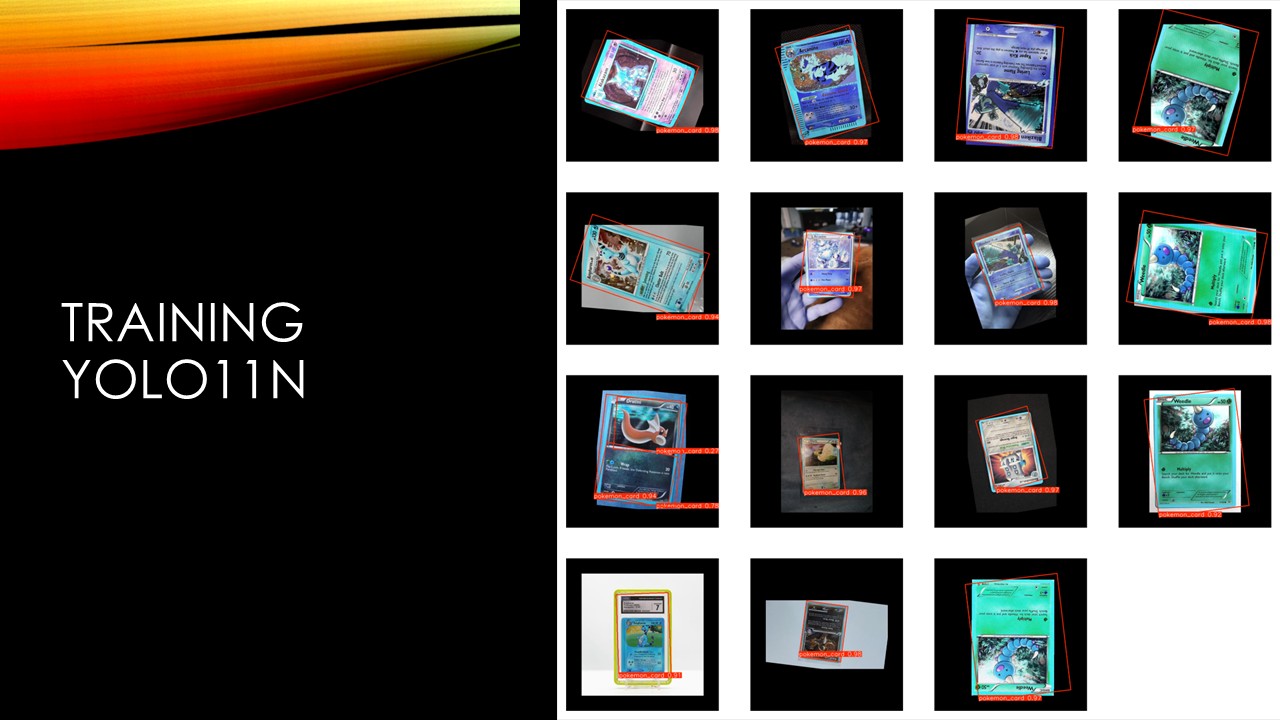
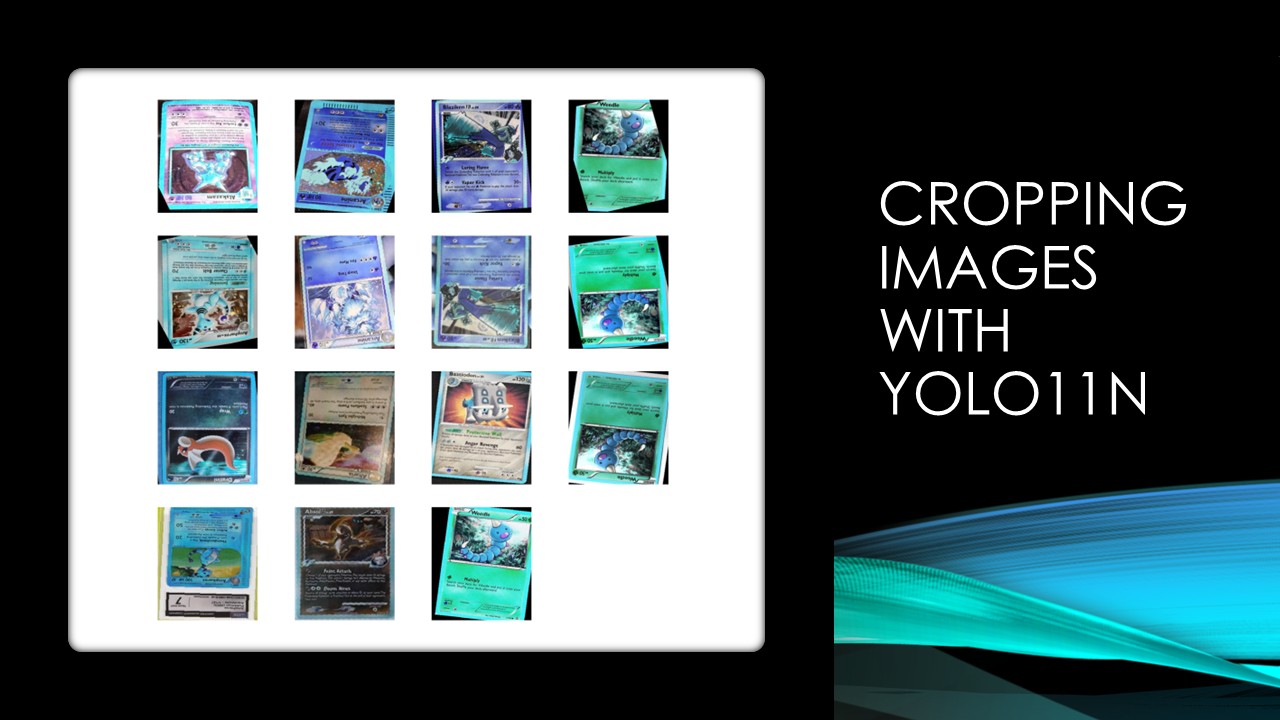
The process started with web scraping eBay listings for a set of 100 Pokemon cards that I chose to test on. From there, I used object detection bounding boxes from the YOLO11n model to crop the images and compare the automatically detected crops against my hand-cropped photos.
Once I had the cropped images, I introduced variance through rotation and color grading so the model would see a wider range of inputs during training. That step mattered because marketplace images are rarely clean or consistent, and I wanted the classifier to generalize beyond the exact examples I collected.
After preprocessing, I trained a YOLOv8 model to classify the cropped card images. The end result was a system that could take in raw listing photos, isolate the relevant region, and classify the card with strong accuracy.
Results & Performance
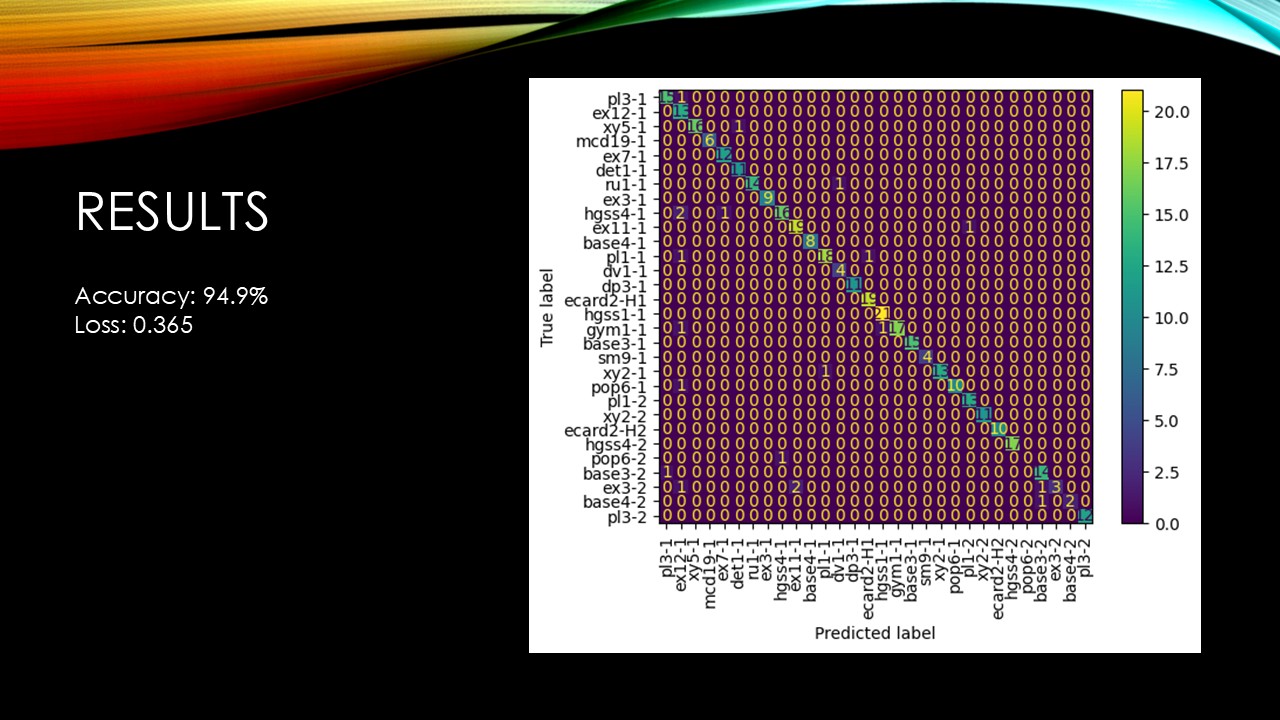
The final model reached 94.9% accuracy with a 0.365 loss. That gave me confidence that the pipeline was capturing the card region well enough for the classifier to work reliably, even when the original images were messy or inconsistent.
I also tracked the intermediate outputs from the detection and preprocessing stages so I could compare bounding-box crops, hand-cropped images, and the final classification results. The confusion matrix made it easier to see where the model was performing well and where the remaining errors clustered.
Future Improvements
- Expand the dataset beyond the initial 100 cards
- Add more image variety from different marketplaces and lighting conditions
- Improve detection and cropping for partially occluded cards
- Compare performance against additional classification architectures